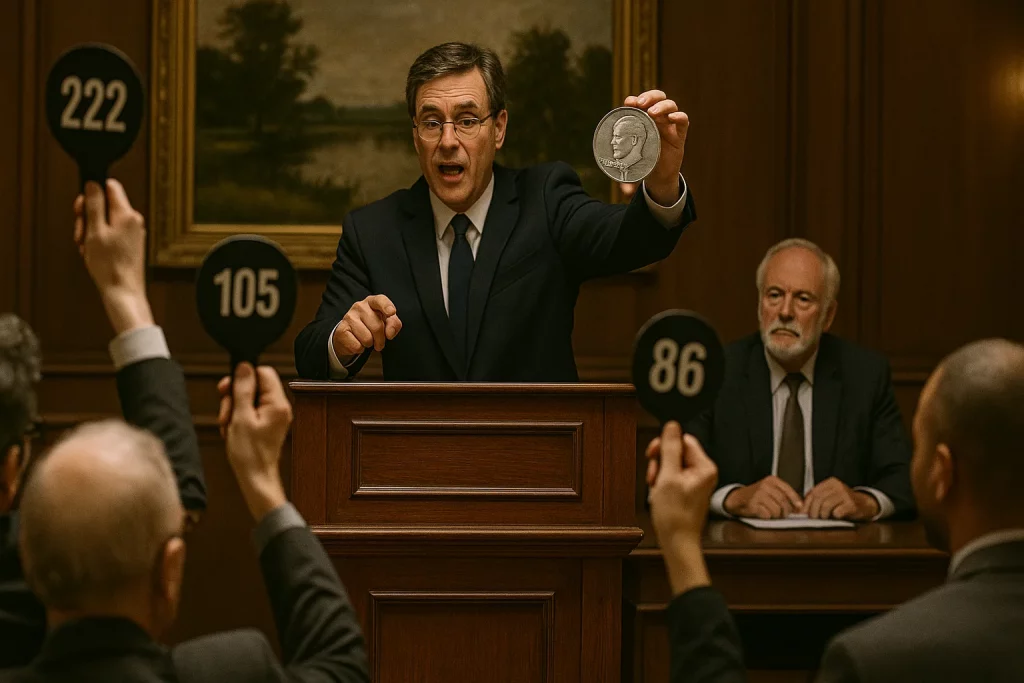
Standard rules don’t apply when dealing with these special pieces, making their final price highly unpredictable, since the cost might be extremely high or it might be quite low.
The actual price of the coins worth money depends on many factors working together.

Understanding Why a Coin is Not in the Catalog
You must begin by finding the reason why this specific coin isn’t listed, making sure to check if it is truly a coin at all, or perhaps just a fake item, or maybe a modern token used for games.
Doing this check should be the first step in your process.
Here are the main reasons coins aren’t included in official listings:
Test Coin
These are trial pieces, produced for checking quality and design before the official final approval, and are never released for general use.
The mint made only a small amount of them, causing them to be highly sought after by collectors.
A Simple Rare Variety
This coin belongs to a common set, but it shows a small difference, like a different date or a different style of writing, meaning this small detail did not get into the official general catalog.
A Coin with a Mistake
This piece has a production flaw, having happened during the striking process, appearing either very obvious or quite subtle.
Big, clear mistakes usually make the coin worth much more money.
Counter or Token
The item looks like a real coin, but the government didn’t issue it, being instead a private creation, perhaps something for a game or an advertisement piece.
Pieces like these usually don’t sell for a lot of money.
Unknown Number Made
The government released this coin for use, but all the official records about it are lost, or the records were never made public, confirming its unique status. Its mystery causes the price to go up.
Basic Rules for Valuation
The process of valuing a non-catalog coin with a coin scanner rests on three basic rules, requiring you to understand rarity, condition, and market desire.
We need to measure each of these rules carefully.
The Number Made
Rarity remains the most important factor for any collectible piece, meaning the fewer coins made, the higher the price will go.
You need to find the documents that indicate the total number of coins issued, realizing that this is a difficult job.
Mints usually produce only a few of these coins, sometimes only one, which means that if your coin is a trial coin, its price is certainly high.
Try to find coins that have common features with yours, that is, they belong to the same time period and are made of the same metal, which will help you get an idea of the total number of coins issued.
Grading
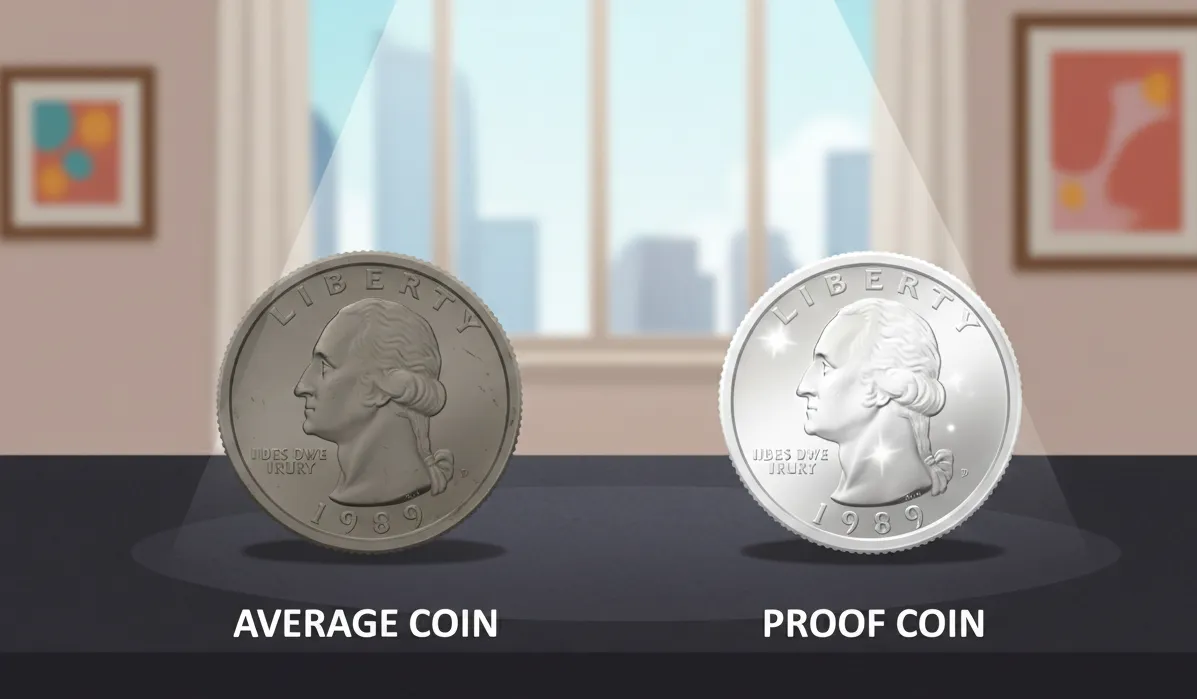
The physical state of the coin always matters greatly for its final price, making it necessary to use the standard rules for grading condition.
- UNC (Uncirculated). The coin never went into general use, remaining in perfect shape, giving it the highest possible price. A unique coin in UNC condition is extremely rare, showing little to no signs of handling.
- AU (About Uncirculated). The coin hardly went into use, showing only minimal signs of wear and tear, keeping its price at a high level.
- XF (Extremely Fine). The coin saw some use, but all the design details stay sharp and clear, resulting in a good price.
- VF (Very Fine) and below. The coin spent time in daily circulation, having the design worn down and blurry, leading to a lower price.
- Mistakes and flaws. If your coin has a mistake, you must look closely at the mistake itself, knowing that a small mistake is worth less money, while a big, obvious mistake is worth more money.
Demand
The value of the coin truly is what a buyer is willing to pay, showing that if many people want to buy it, the price moves upward.
Coins featuring popular themes always cost more, for example, coins showing kings or coins marking important dates in history.
Look for people who specifically collect coins like yours, perhaps collectors who focus on test coins or people who collect pieces with production errors.
Look up records of previous sales for similar coins, checking the final selling price. This auction history is the single best way to guess the price.
Steps for Checking the Coin Technically
Before you can place a value on it, you must check the coin technically, proving that the coin is real and not a copy.
Checking Weight and Size
Every real coin has a precise weight and a specific diameter, needing to be measured accurately.
- Use scales that measure exactly, comparing the weight to the catalog weight of similar coins, expecting the non-catalog coin to weigh nearly the same amount.
- Use a caliper tool to measure the distance across the coin, confirming the diameter matches standard coins from that time period.
Sometimes, test coins are stamped onto metal pieces used for a different coin, causing the weight to be slightly off, but experts must confirm this difference.
Analyzing the Metal
The metal used in the coin must be correct, meaning the coin should be made of the metal people used during that period.
Some fake coins are made from magnetic alloys, whereas real old coins often don’t stick to a magnet, helping to spot a fake.
Look closely at the color, making sure the color matches the type of metal, seeing gold look like gold and silver look like silver.
If you have any doubt about the metal, you need to run an analysis, which shows the exact mix of metals inside, something only specialists can do.
Proof
Checking the authenticity with a free coin value app is especially important for test coins or coins with mistakes, since fakes try to copy these rare items.
- Compare the look of the coin’s design with known real coins, noting that the pattern must look like it came from the same artist or machine.
- The edge of the coin must look correctly made, seeing the writing on the edge matching the style of the time, not showing any signs of being cut or filed.
- The color and layer on the surface of the coin must look natural, appearing over a long time, knowing that an artificial patina is a bad sign, suggesting a forgery.
The Process of Getting a Professional Value
If your coin seems extremely rare, you need to get help from others, ensuring you know its true status.
Contact coin experts.
Reach out to well-known coin specialists, making sure they have experience working with catalogs and with error pieces.
Getting a certificate.
Send your coin to a grading company, which will confirm its real status, giving the coin a score and a special number. Doing this is necessary for getting the best price.
Naming the coin.
The experts might give your coin a formal name, perhaps calling it “Pattern Coin 1958, Type A,” adding trust and helping the sale process.
Risks and Things to Watch Out For
Valuing non-catalog coins comes with various risks, so it’s important to approach the process with caution. There’s always the possibility that a coin might be a forgery, particularly since counterfeits often target rare coins.
Additionally, while the owner may believe their coin is worth a fortune, the actual market value could be significantly lower.
Extremely rare coins may take a considerable amount of time to sell, as they need a specific type of buyer who is prepared to invest a substantial sum.
Conclusion
Placing a value on a non-catalog coin is a complex process, needing lots of experience and careful action.
- Start with real status. Make sure the coin is genuine.
- Figure out the number made. Understand just how rare the coin truly is.
- Find similar sales. Compare it to similar coins that have sold before.
- Use the multiplier. Multiply the price of a similar coin by the rarity factor.
- Trust the experts. Rely on professional help, knowing a certificate settles all questions.
Non-catalog coins are always a mystery, but one you can solve, and solving that mystery often leads to great financial gains.